Rodeo Events
From bull riding to barrel racing — discover every PRCA discipline that makes the Big Bear Rodeo an unforgettable experience.
The Disciplines
Eight Seconds of Glory
Every event at the Big Bear Rodeo is sanctioned by the PRCA (Professional Rodeo Cowboys Association). These are the same disciplines you'll see at the National Finals Rodeo — performed by some of the best cowboys and cowgirls in the sport. Here's what to watch for.
Bull Riding
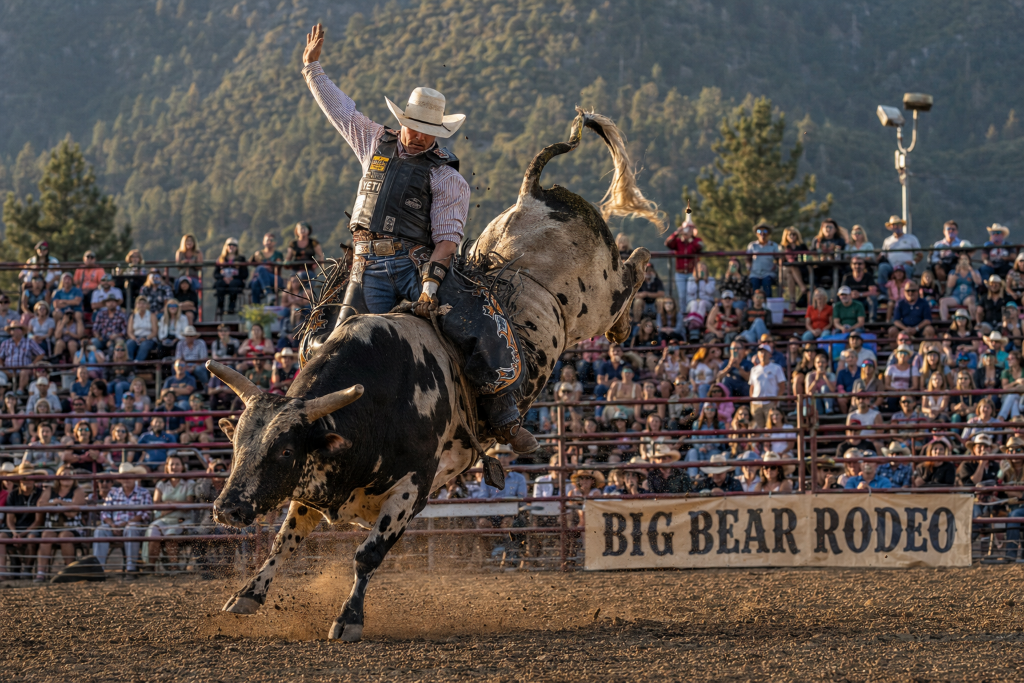
The most dangerous 8 seconds in sports. A cowboy climbs aboard a 2,000-pound bull, grips a flat braided rope wrapped around the animal's chest, and holds on with one hand. Judges score both the rider and the bull — the rider for control and spurring technique, the bull for power, agility, and difficulty. If the rider stays aboard for 8 seconds, they earn a score. If they touch the bull with their free hand or get bucked off, they get nothing.
What to Expect
Explosive power, flying dirt, and held breath. The chutes crack open and the arena erupts. Watch for the bullfighters — they're the athletes in clown makeup who risk their lives to protect the cowboy once he's thrown.
Barrel Racing
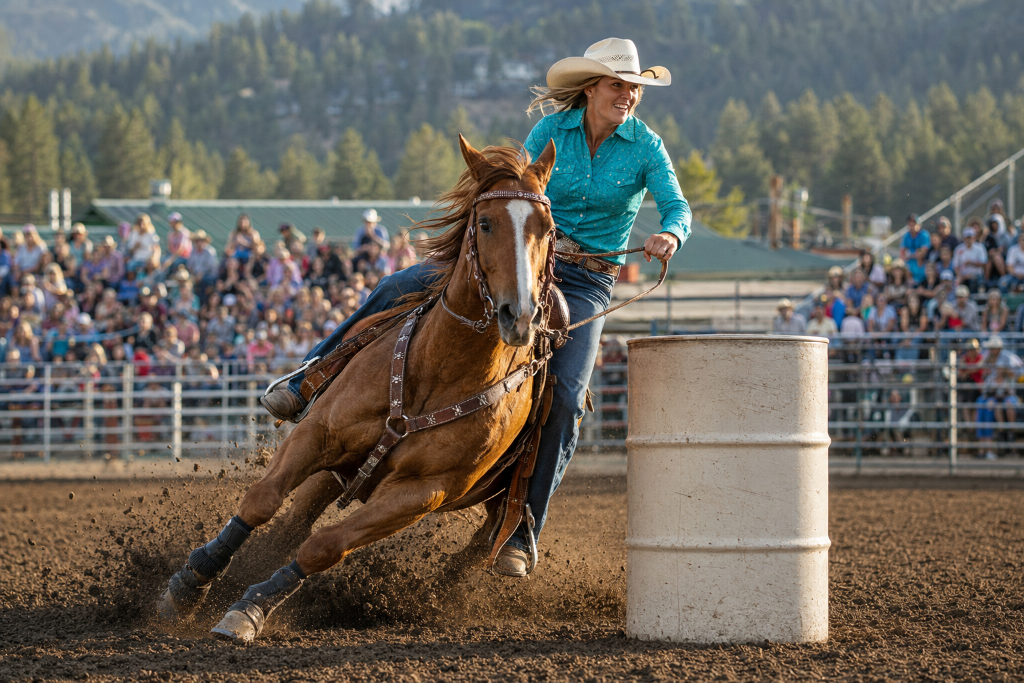
Women's barrel racing is a breathtaking display of horsemanship and speed. The cowgirl rides her horse in a cloverleaf pattern around three barrels, racing against the clock. A tipped barrel adds a 5-second penalty. The fastest time wins. It's about perfect communication between horse and rider — a whisper of the reins, a shift of weight, and a horse that turns on a dime.
What to Expect
Lightning-fast turns, dug-up dirt, and horses that seem to defy physics. The crowd gets quiet during the run and erupts when the time is announced. Times are measured to the thousandth of a second.
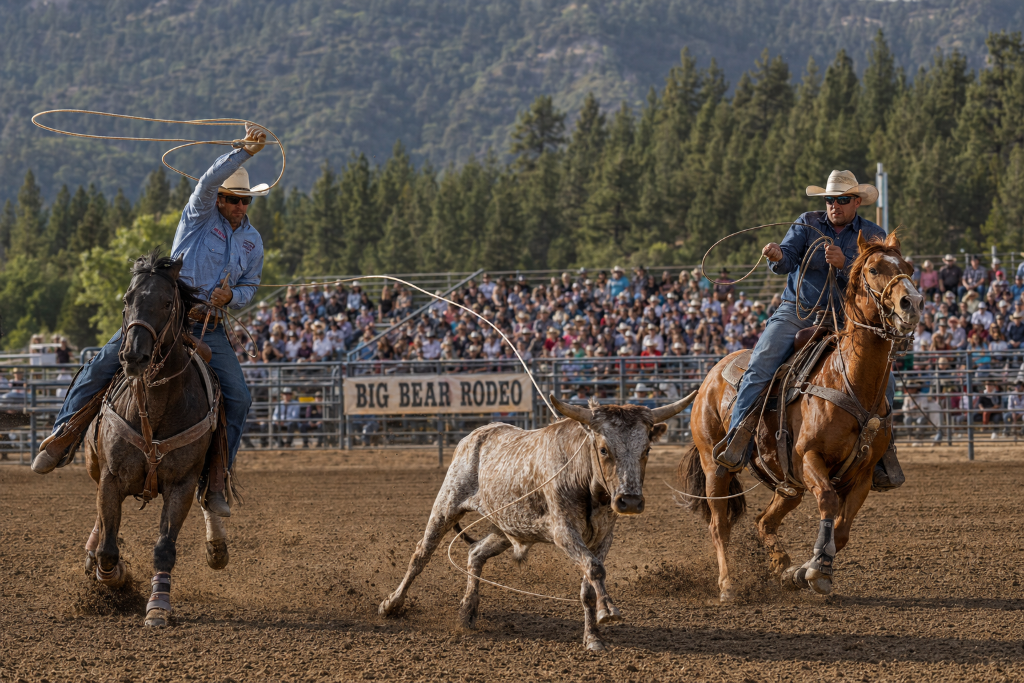
Team Roping
The only true team event in rodeo. Two cowboys — the header and the heeler — work together to rope a steer. The header ropes the steer's horns, then turns the steer to the left. The heeler then ropes both hind legs. If only one leg is caught, they receive a 5-second penalty. It requires precision timing, horsemanship, and trust between partners.
What to Expect
Two riders, one steer, two ropes, and a whole lot of strategy. Watch how the header positions the steer for the heeler — the turn makes or breaks the run.
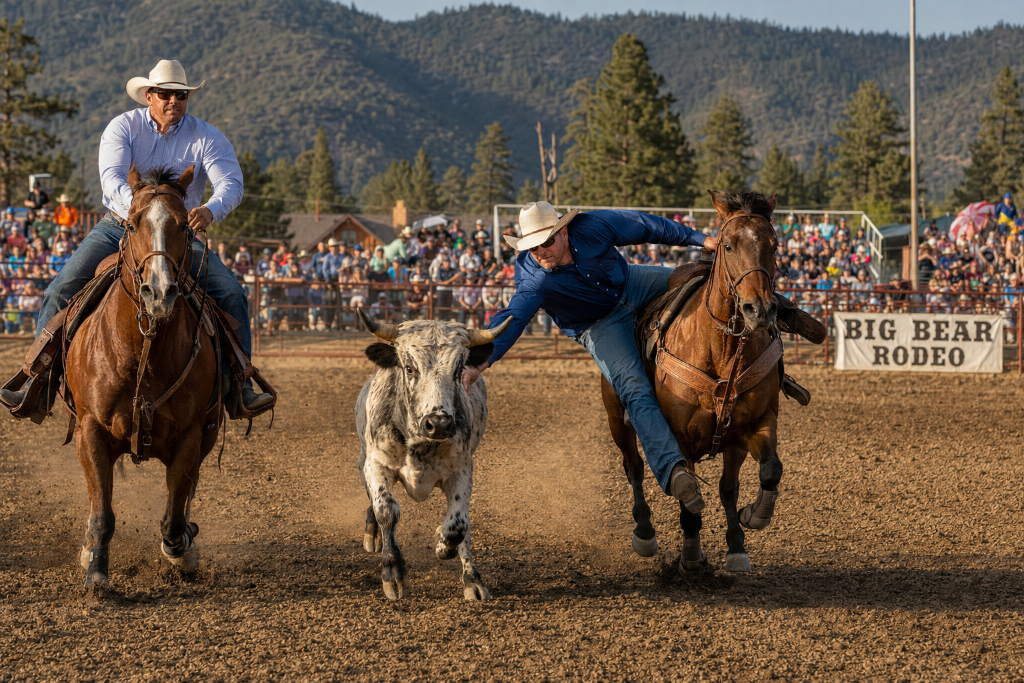
Steer Wrestling
Also called bulldogging, steer wrestling is the quickest event in rodeo. The cowboy rides alongside a running steer, leans from his horse, grabs the steer by the horns, and wrestles it to the ground. A hazer rides on the other side to keep the steer running straight. The clock stops when all four of the steer's feet point up. It's raw strength meets perfect technique.
What to Expect
Sheer power and speed. A 600-pound steer doesn't go down easily. Watch the cowboy's feet hit the ground — that's when the real work begins.
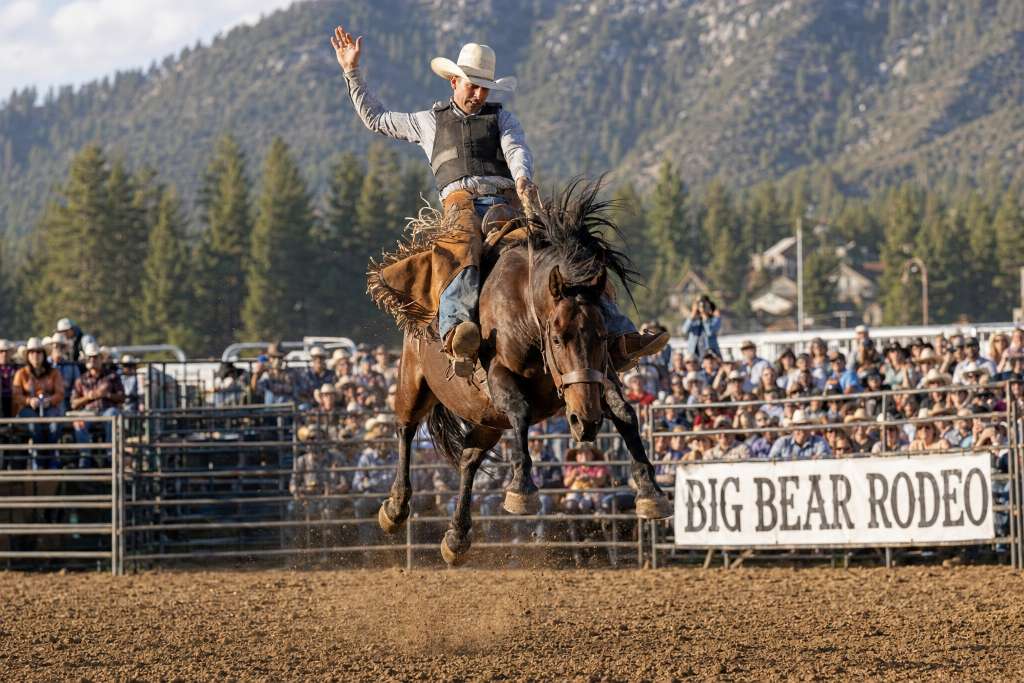
Saddle Bronc Riding
Considered rodeo's classic event, saddle bronc riding evolved from the daily work of breaking horses on the range. The cowboy uses a specialized saddle and a thick rein attached to the horse's halter. The rider must mark out — have his feet above the horse's shoulders when the animal's front feet hit the ground on the first jump — and then spur in rhythm with the horse's bucking. Style and control matter as much as staying on.
What to Expect
Poetry in motion. The rhythmic spurring looks almost like a dance. The best riders make an 8-second ride on a bucking horse look effortless. It never is.
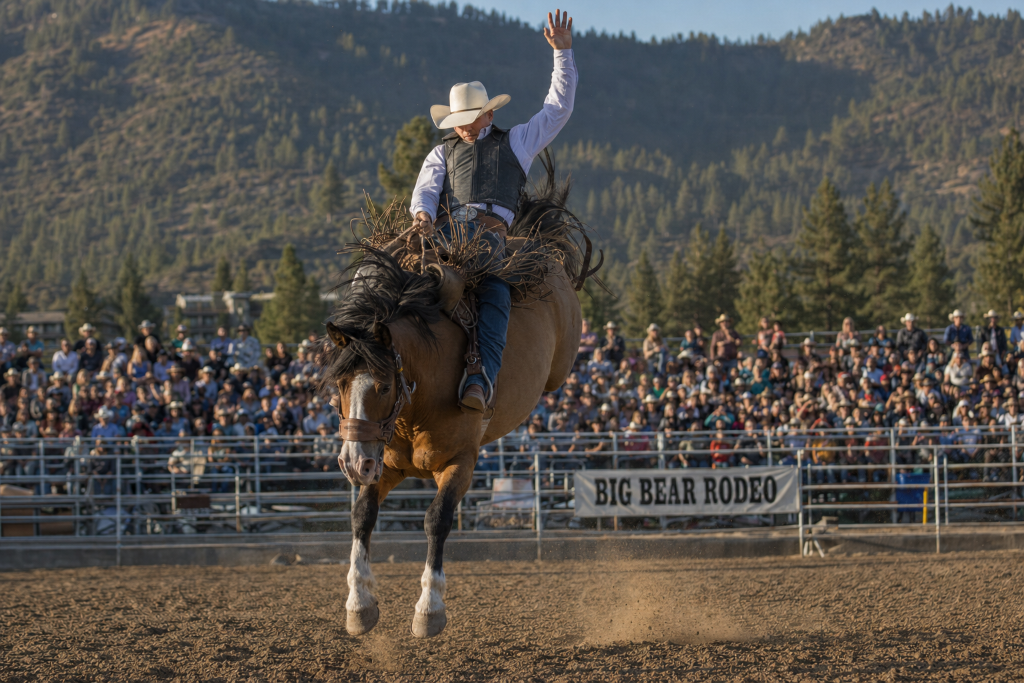
Bareback Riding
Often called the most physically demanding event in rodeo. The cowboy grips a rigging — a leather handle — that's strapped to the horse's back. No saddle, no reins, just a handle and a prayer. The rider must mark out, then spur from the horse's neck to the rigging in time with the animal's bucks. The combination of a bucking horse's power and the rider's strength makes this the event that most often sends cowboys to the injury list.
What to Expect
Brutal, violent, and awe-inspiring. The rider's arm takes enormous stress. Watch the spurring rhythm — that's what separates champions from also-rans.
Tie-Down Roping
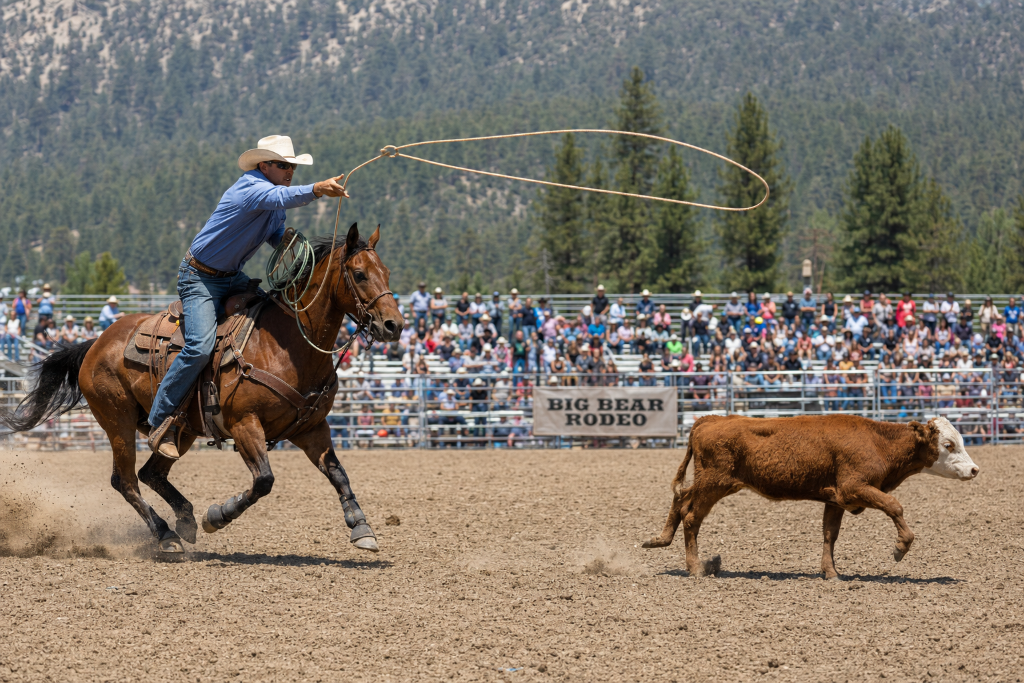
Born from the daily work of ranch hands, tie-down roping (formerly calf roping) tests a cowboy's skill, horsemanship, and speed. The cowboy ropes a calf, dismounts, runs to the calf, throws it to the ground, and ties any three legs together with a pigging string. The horse must hold the rope taut. If the calf gets up within 6 seconds, the cowboy is disqualified. It's a race against time that demands trust between horse and rider.
What to Expect
Precision under pressure. The dismount, the catch, the tie — every second counts. Watch how a well-trained horse backs up just enough to keep the rope tight.
Mutton Bustin'
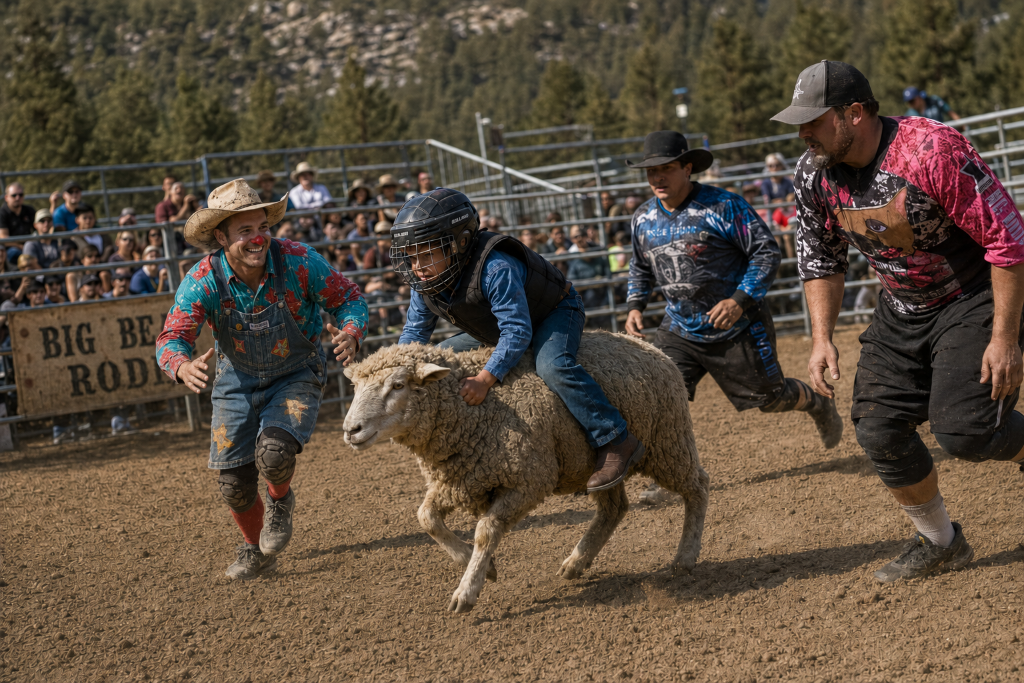
The cutest event in rodeo! Young cowboys and cowgirls (ages 4-7, under 60 lbs) climb aboard a sheep and hold on for as long as they can. It's mutton busting — the next generation of rodeo stars getting their start. Every rider gets a prize, and the crowd goes wild for every single one. No scores, just smiles and maybe a few tears.
What to Expect
Laughter, cheers, and sometimes a tumble. These young riders show incredible grit. Helmets and protective vests are required. Parents, register early — spots fill fast!